

By Eddy Warman
The United States, Mexico, and all of Latin America, including emerging countries that are rated by the Michelin Guide, should take note of the way these supposed inspectors evaluate restaurants. I have never met any of the judges, nor do I believe they have actually visited the restaurants they rate. Instead, it seems they rely on social media, primarily TikTok and Instagram.
The truth is that this situation cannot continue, and I hope that restaurants in the United States, as well as those in Mexico and other countries, will file a formal protest and that Michelin will change the way it operates. At one point, Michelin was a guide for the public and for motorists traveling the roads. Today, it has become a poor example and a highly profitable business.
Let us speak plainly, without detours or long-table diplomacy: the arrival of the Michelin Guide in Mexico was sold to us as the consecration of our gastronomy before the world’s most rigorous tribunal. What few dare to point out, scalpel in hand, is that we were not witnessing the summit of anthropological evaluation, but rather a carefully calculated commercial transaction. It was an exercise in destination marketing in which the inspector’s judgment became subordinate to the flow of public money and the algorithms of social media.
The Farce of the 2026 Edition: Desk Inspectors and Judging Through TikTok
If the first edition of the guide raised doubts, the 2026 edition confirmed the greatest suspicion of all: the famous «anonymous inspectors» had not even bothered to visit the restaurants run or owned by the true standard-bearers of our cuisine.
How can a serious list be created? How can stars be awarded when the evaluators have failed to recognize the kitchens that truly sustain this country’s culinary identity?
The answer is as simple as it is outrageous: they never went because senior tourism officials in Mexico failed to recommend these places, because they themselves were unfamiliar with them, or because inspectors simply limited themselves to whatever social media trends dictated.
We are witnessing touchscreen auditing. Instead of conducting fieldwork, exploring markets, tasting food on the streets, or evaluating operational consistency over months, these supposed evaluators assembled their list of award recipients by scrolling through Instagram and TikTok. Restaurants were judged according to the visual appeal of their dishes, the volume of social media mentions, and the recommendations of fashionable public relations agencies based in districts such as Polanco, Roma, and San Pedro Garza García.
To be completely honest, aside from a handful of exceptions that have demonstrated consistency over many years, the overwhelming majority of restaurants that received or retained a Michelin star in the 2026 guide simply did not deserve one.
How else can one explain the fact that the true pillars of contemporary Mexican cuisine were once again left out?
For me, ignoring Ricardo Muñoz Zurita is an unforgivable act of gastronomic illiteracy. We are speaking of the living encyclopedia of Mexican cuisine, a man who has devoted his life to the anthropology of food, the preservation of endangered heirloom corn varieties, and field research conducted at Azul Histórico.
The same applies to Pablo Salas of Amaranta, who redefined the cuisine of the State of Mexico by elevating humble ingredients—such as green chorizo, pig’s feet, wild greens, and pressed pork rind—to the highest levels of technical precision. Genuine research requires walking through markets, speaking with producers, and understanding the milpa ecosystem. It is far easier to evaluate restaurants from a hotel room while looking at a mobile phone or securing a table at the latest fashionable establishment.
And the chef Israel Aretxiga, renowned for his work at Zeru, has just opened his new restaurant, Terra, a concept that, given its culinary proposal and standards, should be evaluated within the next two years.
Together with them, it is astonishing that the so-called evaluators seem completely unaware of a long list of highly respected chefs and restaurant owners who remain absent from every category of the guide: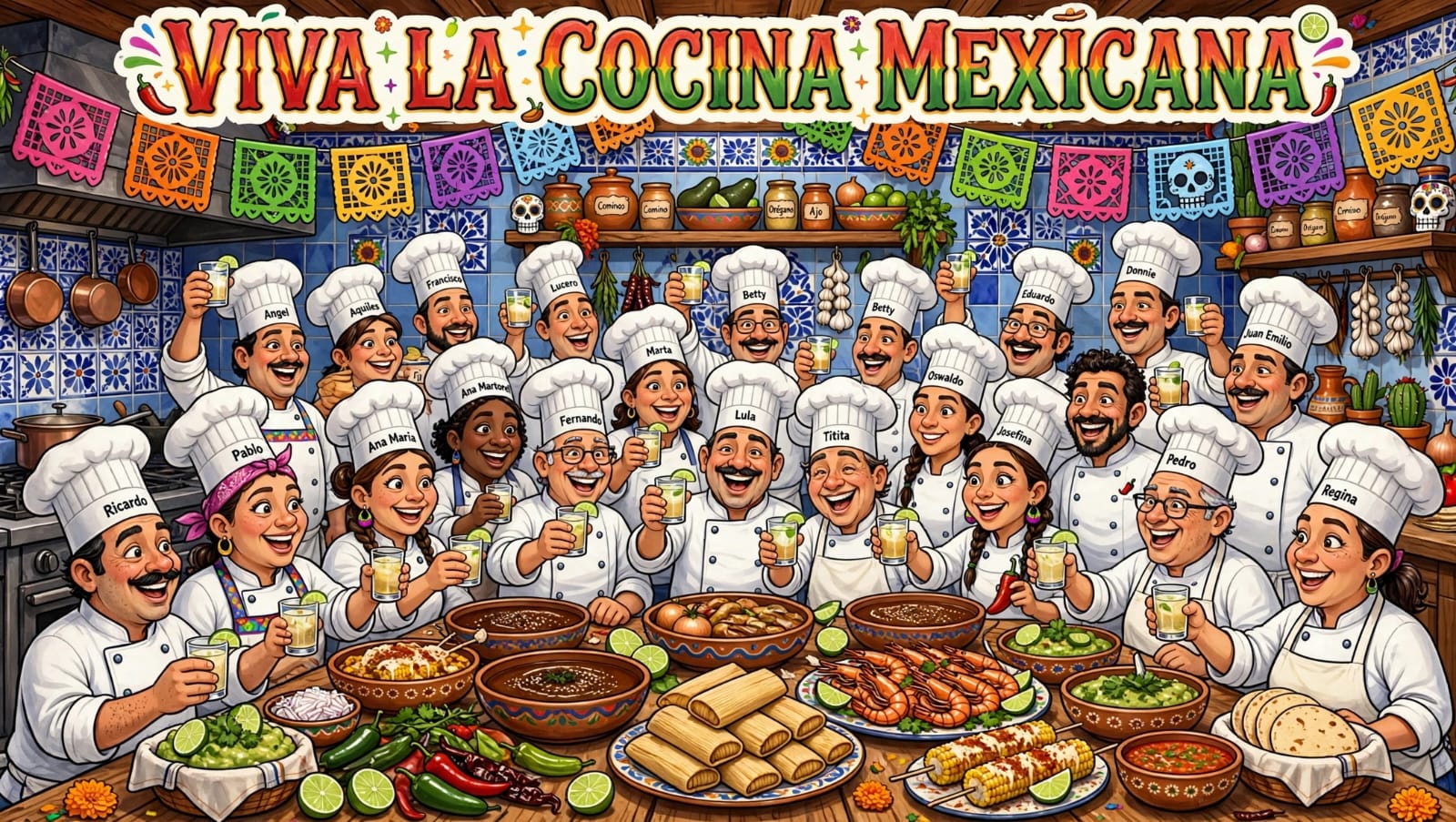
- Ana María Arroyo (El Tajín, Mexico City): A leading researcher of traditional cuisine devoted to culinary preservation and the use of native ingredients in Coyoacán.
- Ana Martorell (Ammar, Mexico City): Creator of playful and conceptual dining experiences that narrate the history of Mexico through food.
- Cesc Gay (CESC, Mexico City): A Catalan chef based in Mexico, recognized for his impeccable approach to contemporary Mediterranean cuisine.
- Sofía Cortina (La Vitrine, Mexico City): Regarded as one of Latin America’s finest pastry chefs, she leads an artisanal bakery founded upon refined French techniques.
- Fernando Martínez Zavala (Migrante, Mexico City): A chef from Michoacán whose flawless technique explores the processes of global culinary cross-pollination.
- Oswaldo Oliva (Lorea, Mexico City): Drawing upon a strong European background, he offers one of the capital’s most experimental and personalized tasting menus.
- Lula Martín del Campo (Marea/Cascabel, Mexico City): A staunch defender of biodiversity, heirloom corn varieties, ancestral beans, and sustainable fishing practices.
- Carmen «Titita» Ramírez (El Bajío, Mexico City): Matriarch and living legend of traditional Veracruz and Puebla cuisine on a large scale.
- Josefina Santa Cruz (Sesame, Mexico City): Known for combining the essence of Asian street food with the freshness of Mexican ingredients.
- Pedro Evia (K’u’uk, Mérida, Yucatán): A pioneer of avant-garde Mayan cuisine who employs scientific and laboratory techniques to reinterpret the flavors of the Yucatán Peninsula.
- Regina Escalante (Merci, Mérida, Yucatán): A chef who seamlessly merges classical French technique with seasonal ingredients from Yucatán.
- Ángel Vázquez (Intro, Puebla): His flagship restaurant, dedicated to contemporary cuisine inspired by global influences, remains inexplicably absent from the list.
- Aquiles Chávez (Sotero, Pachuca, Hidalgo): A chef whose work pays tribute to the products of Hidalgo and has transformed the restaurant into a destination for culinary pilgrims.
- Francisco Molina (Evoka, Apizaco, Tlaxcala): A researcher devoted to preserving Tlaxcalan culinary heritage through the use of native corn, edible insects, and products derived from the agave plant.
- Lucero Soto (LU Cocina Michoacana, Morelia, Michoacán): An outstanding ambassador of Purépecha cuisine who modernizes traditional recipes while preserving their essence.
- Marta Zepeda (Tierra y Cielo, San Cristóbal de las Casas, Chiapas): A defender of fair trade and a pioneer in highlighting the culinary traditions of the Chiapas Highlands through close collaboration with Indigenous communities.
- Betty Vázquez (El Delfín, San Blas, Nayarit): An emblematic chef and historian of the cuisine of the Riviera Nayarit.
- Eduardo Palazuelos (Zibu, Acapulco, Guerrero): Creator of the Mex-Tai culinary concept, a fusion inspired by the historic trade route of the Manila Galleon.
- Donnie Masterton (The Restaurant, San Miguel de Allende, Guanajuato): One of the driving forces behind the farm-to-table movement in the Bajío region.
- Juan Emilio Villaseñor (La Cocinoteca, León, Guanajuato): A master of open-fire cooking, smoking techniques, and artisanal charcuterie.
The contradictions of the 2026 edition become almost absurd when one examines its criteria. While El Califa de León lost its star following the operational collapse brought about by its overwhelming popularity, distinctions were simultaneously maintained or granted to newly opened establishments serving Wagyu tacos priced at more than 300 pesos, such as La Once Mil.
Rewarding restaurants that have been operating for only a few months simply because they have become viral sensations or rely on expensive imported ingredients undermines any notion of consistency.
The Business of Paying to Be Evaluated
To understand why the guide rewards popularity over knowledge, one only needs to follow the money. Michelin no longer relies on the sale of maps or printed guides. Its true business model is now known as the Destination Marketing Partnership.
In Mexico, state tourism boards and public trusts pay between €300,000 and €500,000 per year for each region to be included in the inspection process.
En México, las Secretarías de Turismo estatales y los fideicomisos públicos pagan entre 300,000 y 500,000 euros anuales por cada entidad para ser inspeccionada.
| Market | Government Sponsorship | Commercial Model |
| Europe (France, Spain, Italy) | NO | Michelin operates through its own resources, historical prestige, and private sponsors. |
| United States and Asia (California, Texas, Singapore, Thailand, Seoul) | YES | Cities and states sign multimillion-dollar agreements financed with public funds. |
| Latin America (Mexico, Brazil, Argentina) | YES | The entire system is financed by local tourism authorities. |
This has created a culinary map dictated by financial resources. States possessing extraordinary cultural and gastronomic heritage—such as Michoacán, Hidalgo, Tlaxcala, Chiapas, and Guerrero—effectively do not exist for the guide because their governments did not pay the required sponsorship fees.
Meanwhile, distinctions within Mexico continue to be concentrated in the same affluent tourist corridors, a tendency that has expanded into the hospitality industry through the introduction of Michelin Keys.
Mexico 2026 Official Selection Matrix
The following section presents a detailed overview of the restaurants recognized in the 2026 edition, including their category, location, and a critical assessment of each establishment.
crítica correspondiente a cada proyecto:
| State / Region | Restaurant | 2026 Category | Critical Assessment & Status |
| Mexico City | Quintonil | Two Stars | Justified. Consistent technical excellence, genuine product research, and a mature, well-established concept. |
| Mexico City | Pujol | Two Stars | Justified. Historical significance and undeniable influence on the global projection of Mexican fine dining. |
| Mexico City | Em | One Star | Highly technical cuisine, although closely aligned with the fashionable European aesthetic model. |
| Mexico City | Esquina Común | One Star | An intimate and informal concept that, according to this view, has been overrated when compared with restaurants possessing much longer traditions. |
| Mexico City
|
Expendio de Maíz | One Star | A concept centered on nixtamalized corn without a fixed menu; a product-driven approach that the author considers overvalued within the Roma district. |
| Mexico City | Gaba | One Star (New) | A new addition to the guide, representing a form of contemporary fine dining strongly supported by fashionable culinary circles. |
| Mexico City | La Once Mil | One Star (New) | An inconsistent choice. Expensive Wagyu tacos are presented as an example of the growing influence of gentrification and social-media popularity. |
| Mexico City | Masala y Maíz | One Star | A blend of South Asian and Mexican culinary traditions, developed as a highly conceptual proposal aimed at a specialized audience. |
| Mexico City | Máximo | One Star | Well-executed local ingredients, although the author argues that the restaurant has been overvalued by the high-end dining scene of the Roma district. |
| Mexico City | Rosetta | One Star | A debatable choice. Remarkable aesthetics and significant media attention are contrasted with an inconsistent level of service. |
| Mexico City
|
Sud 777 | One Star | A solid culinary proposal centered on vegetables, despite fluctuations in the overall dining experience. |
| Baja California | Animalón | One Star | A spectacular setting in the Guadalupe Valley, featuring a culinary proposal designed to create a strong visual impression. |
| Baja California | Conchas de Piedra | One Star | Fresh seafood and local wines presented within a concept aimed primarily at high-end tourism. |
| Baja California | Lunario | One Star | A successful farm-to-table concept that nevertheless remains firmly integrated into the region’s protected tourism circuit. |
| Baja California | Olivea | One Star | A countryside dining experience centered on local products and an aesthetic carefully tailored to social media exposure. |
| Baja California | Damiana | One Star | A refined interpretation of Baja-Med cuisine deeply connected to the landscape of the Guadalupe Valley. |
| Quintana Roo | Cocina de Autor Riviera Maya | One Star | A highly technical tasting menu developed within a luxury hotel environment. |
| Quintana Roo | HA’ | One Star | An international fine-dining concept adapted to the standards of high-end hospitality at Xcaret. |
| Quintana Roo | Le Chique | One Star | An ambitious and technically sophisticated restaurant whose format remains closely tied to the resort industry. |
| Yucatán | Huniik | One Star | One of the few restaurants recognized for conducting meaningful research into Mayan ingredients while preserving a strong sense of identity. |
| Yucatán | La Barra de Huniik | One Star | An extension of the original concept, offering an intimate experience for a limited number of guests. |
| Yucatán | Ixi’im | One Star | A fine-dining experience framed by the luxurious setting of a restored henequen estate. |
| Jalisco | Alcalde | One Star | An honest approach to cooking, supported by solid technique and long-standing consistency within Guadalajara’s culinary scene. |
| Jalisco | Xokol | One Star | A concept centered on heirloom corn varieties and traditional masa preparation techniques, with a strong commitment to preserving culinary heritage. |
| Nuevo León | KOLI Cocina de Origen | One Star | A technically ambitious exploration of northeastern Mexican cuisine developed in the affluent district of San Pedro Garza García. |
| Nuevo León | Pangea | One Star | One of Monterrey’s historical culinary landmarks, recognized largely for its long-standing contribution to the region’s gastronomic identity. |
| Oaxaca | Levadura de Olla | One Star | A tribute to native tomatoes and the traditional smoke-based cooking methods of Oaxaca. |
| Oaxaca | Los Danzantes | One Star | Classical Oaxacan cuisine integrated into an established brand associated with mezcal production and cultural tourism. |
| Baja California Sur | Cocina de Autor Los Cabos | One Star | An exclusive tasting-menu format operating within an ultra-luxury hotel development. |
The Harsh Critique of the 2026 Selection
The frustration shared by industry professionals and experienced observers after the publication of the 2026 edition may be summarized in four central points.
- Remote and superficial evaluation
It has become evident that inspectors failed to revisit restaurants to verify long-term consistency. Their assessments were based primarily on photographs, sponsored media coverage, and trends circulating on social media platforms.
- Stars awarded to fashionable concepts
With the exception of a few historically significant establishments possessing unquestionable technical excellence—such as Quintonil and Pujol—the author argues that many of the restaurants on the list have received recognition disproportionate to their merits. Visual presentation has prevailed over flavor, tradition, and authenticity.
- The imposition of a European model
Mexican restaurants are increasingly encouraged to adopt rigid dining protocols, heavy tableware, and lengthy tasting menus modeled on European traditions in order to fit within Michelin’s standards, thereby sacrificing the warmth and spontaneity that characterize Mexican hospitality.
- Gastronomic segregation
Nearly ninety percent of the distinctions are concentrated in affluent neighborhoods and luxury hotel complexes, leaving the vast majority of the country’s authentic culinary landscape unrecognized.
The Global Phenomenon of Renouncing and Rejecting Michelin Stars
This commercial drift is far from an isolated phenomenon. Around the world, chefs have learned the lesson the hard way and have gradually begun distancing themselves from the French institution.
Reasons for renouncing Michelin recognition
Financial unsustainability: escalating operating costs involving service personnel, luxury glassware, table linens, and extensive wine cellars have significantly reduced profit margins.
Mental health and psychological pressure: burnout, anxiety, the constant pressure imposed by anonymous inspections, and a number of tragedies that have deeply affected the industry.
Loss of creative freedom: the rigidity of tasting menus and the standardization associated with a Eurocentric model have limited the chef’s ability to innovate.
Historical examples in Europe
United Kingdom: Marco Pierre White, the first chef to return three Michelin stars in 1999, famously declared that the inspectors knew less than he did. Other examples include Nico Ladenis and Skye Gyngell, who described the distinction as a burden rather than an honor.
France: Alain Senderens returned his three stars in order to open a more accessible restaurant. Antoine Westermann, Olivier Roellinger, Sébastien Bras, Marc Veyrat, Maxime Lebrun, and Cyril Lignac also became symbols of resistance against the system.
Spain and Italy: Dani García closed his three-star establishment only weeks after receiving the distinction in order to pursue a more sustainable business model. Other notable examples include Julio Biosca, Joan Borràs, Gualtiero Marchesi, and Gianfranco Vissani.
Belgium and Switzerland: Karen Keygnaert, Frederick Dhooge, and Stephane Buyens all became emblematic examples of chefs who publicly challenged the Michelin system.
The Bistronomy Movement: Historically associated with Yves Camdeborde, this movement sought to promote exceptional cuisine in more informal environments, free from the pressure of guidebook evaluations.
Resistance in Asia and the United States
Japan: Jiro Ono (Sukiyabashi Jiro) and Takashi Saito (Sushi Saito) disappeared from the guide after restricting reservations exclusively to long-standing customers.
South Korea: Eo Yun-gwon, chef and owner of Ristorante Eo, initiated legal proceedings against Michelin after unsuccessfully attempting to have his restaurant removed from the guide.
Thailand: Jay Fai, Bangkok’s celebrated street-food icon, publicly criticized the consequences of gentrification, the overwhelming influx of tourists, and increased scrutiny from government authorities following the award of her Michelin star.
The United States and Australia: David Chang (Momofuku) has consistently criticized the guide’s Eurocentric perspective, while Fermín Núñez (Suerte) has defended authenticity without the need for imported seals of approval. In cities such as Melbourne and Sydney, local authorities have openly opposed the use of public funds to attract the guide.
Conclusion
It is worth remembering the supreme irony of the situation.
Thanks to figures such as Ricardo Muñoz Zurita—who assumed the historic responsibility of preparing the decisive banquet of chiles en nogada for international evaluators during the process through which traditional Mexican cuisine was recognized by UNESCO as an Intangible Cultural Heritage of Humanity—Mexican gastronomy secured its place among the world’s great cultural traditions.
And yet today, Ricardo is not even being considered by the Michelin Guide.
Most likely, neither the organizers of the event, nor the executives of the National Chamber of the Restaurant Industry, nor the improvised touchscreen inspectors have the slightest awareness of this historical fact.
Mexican gastronomy never required the commercial blessing of a French tire manufacturer to justify either its existence or its value.
Rather than relying upon merchants and anonymous inspectors who judge cuisine through mobile phones, the Michelin Guide should return to its original purpose: a guide evaluated by genuine consumers, recommended by travelers, and confirmed by those who truly experience the roads, landscapes, and cultures it claims to celebrate.
Paying homage to a publicly funded seal of approval while ignoring the culinary anthropology of those who built the nation’s identity, and while awarding distinctions according to social-media trends, is not gastronomic criticism.
It is simply marketing.
You can also read: Wine Is Losing Consumers, Tearing Out Vineyards, and Still Thinks Marketing Is the Problem