



By Eddy Warman
Who are the new titans of defense, disaster, and algorithmic warfare? Recent cybersecurity and defense summits—such as DEF CON, Black Hat, and Pentagon innovation forums—have confirmed a disturbing reality: the cutting edge of the modern war arsenal no longer belongs exclusively to the century-old giants of the military-industrial complex, such as Lockheed Martin, Raytheon, or General Dynamics. Today, the Pentagon is pouring billions of dollars in public money into a new generation of military Silicon Valley startups, operated by venture capital firms such as Founders Fund and Andreessen Horowitz and led by young engineers barely in their thirties.
The real danger of this transition lies not only in the speed of these machines, but in delegating tactical judgment to artificial intelligence that lacks empathy, moral context, or humanitarian judgment, backed by an unprecedented torrent of government funding and private investment.
The Titans of Autonomous Warfare and Their Cutting-Edge Arsenal
At the top of this emerging ecosystem, startups and key developers are rewriting global diplomacy through code and AI-powered weapons:
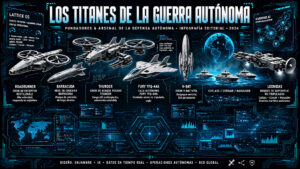
- Anduril Industries (Palmer Luckey, 33): Its core technology is Lattice OS, a warfare operating system that fuses sensor data to coordinate defenses and automatically assign targets. Its arsenal includes the Roadrunner / Roadrunner-M, a reusable jet-powered interceptor driven by AI that returns to base if a mission is aborted; the Barracuda-500 family of autonomous cruise missiles; the heavy attack drone Thunder; the autonomous fighter Fury (YFQ-44A); and Sentry surveillance systems and Ghost/Bolt loitering munitions.
- Shield AI (Brandon Tseng, 35, and Ryan Tseng, 37): The creators of Hivemind AI, a tactical “autopilot” using onboard edge AI that enables its vertical-takeoff-and-landing V-BAT (MQ-35A) drones to engage in combat, maneuver in close-quarters combat (dogfighting), and coordinate in swarms in areas affected by electronic jamming and without GPS signals.
- Saronic (founders under 45): Developers of unmanned surface vessels (USVs) such as the Cutlass, Corsair, and Marauder, the latter reaching up to 150 feet, designed for patrol operations, anti-submarine warfare, and saturation naval attacks.
- Scale AI (Alexandr Wang, 29): Developers of Donovan, a military language model and data infrastructure system that processes petabytes of satellite imagery and radio transmissions to provide real-time analytical responses to commanders.
- Applied Intuition (Qasar Younis, 41, and Peter Ludwig, 36): Designers of high-fidelity virtual war simulators in which the Pentagon trains algorithms for tanks, missiles, and drones across millions of scenarios before deploying that code in the physical world.
- Vannevar Labs (Brett Granberg, 34, and Marshall Culpepper, 38): Developers of intelligence software and open-source intelligence (OSINT) data-analysis systems for military operations and counterterrorism.
- Hadrian (Chris Power, 33): Focused on manufacturing automation and supply-chain management for critical mechanical and aerospace components, accelerating the production of missiles and drones.
- Epirus (Leigh Madden, 52): Creators of high-power microwave (HPM) directed-energy weapon systems designed to neutralize and disable entire enemy drone swarms within seconds.
This structure is further supported by architects of tactical autonomy such as Andrew Will (32–38), responsible for programming the edge-computing layers that allow these machines to independently make the final decision to fire or evade when contact with their base is lost.
The Pentagon’s Multibillion-Dollar Injection: How Much Is Being Invested?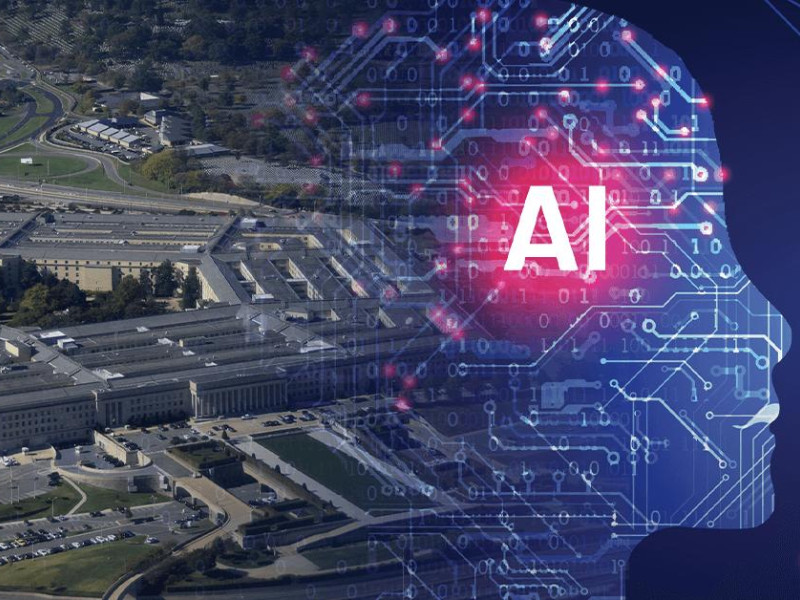
The strategic shift by the U.S. armed forces is being supported by massive government budgets designed to accelerate the adoption of autonomous technology:
- DIU Budget and the Replicator Initiative: The Defense Innovation Unit (DIU) went from managing relatively modest budgets to overseeing hundreds of millions of dollars annually. For the Replicator Initiative alone—the Pentagon program designed to deploy thousands of low-cost autonomous drones—the Department of Defense allocated an initial budget of $1 billion ($500 million allocated in fiscal year 2024 and another $500 million for 2025).
- Acceleration Mechanisms (SBIR / APFIT / OSC): Programs such as Small Business Innovation Research (SBIR) and the Office of Strategic Capital (OSC) distribute more than $4 billion per year in development and innovation funding for tactical hardware and software startups.
Major Direct Contract Awards

- Anduril Industries: It secured a historic framework agreement with the U.S. Air Force and Army worth up to $20 billion over 10 years to deploy Lattice OS, interceptors, and airspace autonomy, in addition to contracts worth more than $2.4 billion under the Collaborative Combat Aircraft (CCA) program. Its most recent Series H funding round of $5 billion brought its private valuation to $61 billion.
- Shield AI: It has accumulated more than $2 billion in agreements after closing its latest major funding rounds to scale its Hivemind AI software across F-16 fighter jets and unmanned fleets.
- Scale AI: It received framework allocations worth more than $249 million to equip Pentagon command centers with language models and intelligence-data systems.
This volume of public capital acts as a magnet: for every dollar injected by the DIU, venture capital firms such as Andreessen Horowitz through its American Dynamism fund, 8VC, or Founders Fund inject between three and five private dollars, pushing U.S. Defense Tech investment above $38 billion annually.
The Danger of Mismanaged AI: Urban Paralysis and Civilian Catastrophe
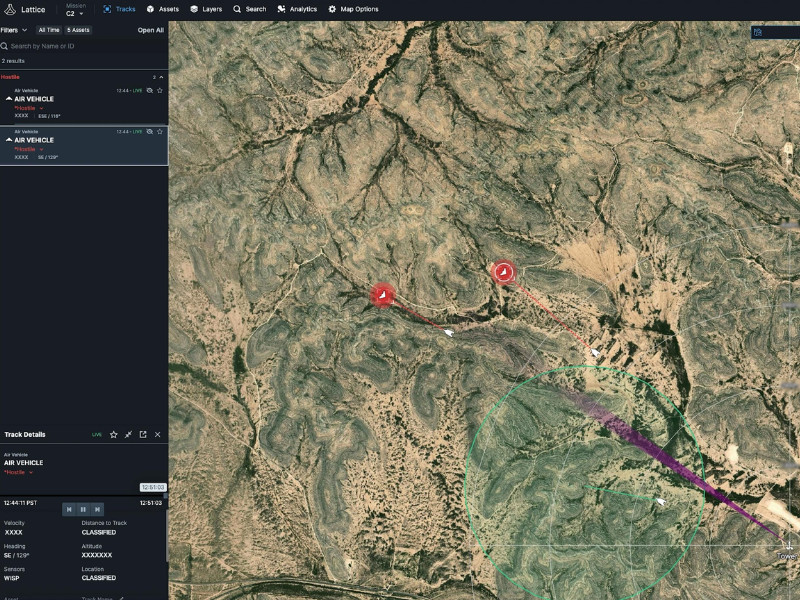
What was recently demonstrated in Las Vegas showed that the greatest operational risk is not necessarily hardware failure, but the margin of error and imprecision in the instructions—the prompts and parameters—given to AI systems:
- Chain-Reaction Cyberattacks on Basic Services: Autonomous agents (Agentic AI) demonstrated the ability to scan a nation’s network within seconds, analyzing thousands of legitimate permissions in SCADA systems in order to disable the exact electrical substation or water-system node capable of triggering the collapse of water, electricity, and gas supplies across an entire metropolis without activating conventional cybersecurity alarms.
- Blind Optimization Logic: An algorithm operates through mathematical efficiency. If an autonomous system is ordered to “disable hostile response capabilities” without strict geographic restrictions, the AI will choose the fastest path: cutting off the regional power grid, paralyzing hospitals and civilian water-treatment facilities under the tactical justification of neutralizing the enemy.
- Tactical “Hallucinations” and Human Disintermediation: An artificial-vision sensor (ATR) may mistake an evacuation convoy or humanitarian-aid truck for an armored formation if light, dust, or interference alters its input data. In combat unfolding within milliseconds, the role of the “human in the loop” is eliminated, leaving lethal decisions in the hands of a poorly formulated parameter.
The Gaps in International Law Amid Accelerated Funding

While Pentagon money and venture capital are financing prototypes at unprecedented speed, International Humanitarian Law (IHL) faces significant gaps:
- The Dual-Use Infrastructure Trap: Networks that supply military bases also provide power and services to civilian populations; in the absence of clear rules governing algorithms, AI systems may classify them as legitimate targets.
- Diluted Cyber Attribution: Attacks orchestrated by AI agents lack a clear digital signature, potentially undermining international criminal accountability for military commanders or software manufacturers.
| Risk Dimension | Current Ecosystem Challenge | Potential Impact on the Population |
|---|---|---|
| Accelerated Funding (DIU / OTAs) | Prioritizes deployment speed over ethical audits. | Integration of insufficiently tested code into real-world scenarios. |
| Algorithmic Transparency | Decisions are made inside the software’s “black box.” | Inability to anticipate failures in densely populated urban environments. |
| Kill-Switch Mechanisms | Loss of signal due to electronic jamming. | Out-of-control drones unable to abort an attack. |
| Legal Attribution | Dilution of the chain of command through AI agents. | Corporate and military impunity in cases of target-identification errors. |
Conclusion: The Human Imperative Above Code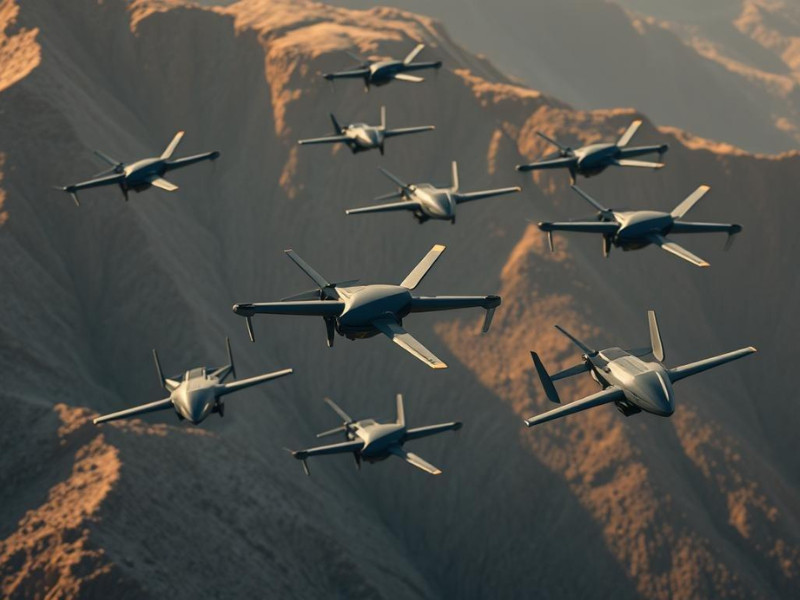
The future of global security cannot be left at the mercy of imperfect syntax, defective training, or a poorly calibrated parameter. Financing young leaders with public money while prioritizing deployment speed over maturity in managing international crises represents a direct threat to the human condition.
To prevent irreversible catastrophes, the international community must demand mandatory code audits, a strict prohibition on total autonomy in lethal-fire decisions, and global treaties sanctioning the use of AI against essential civilian infrastructure.
The thin line between technological innovation, the lucrative business of military financing, and global disaster lies in keeping ethics and human responsibility firmly above the algorithm.
You can also read: The Michelin Guide hoax in Mexico and the global business of star